In public policy, what gets measured often determines what gets addressed. What goes uncounted can persist for generations.
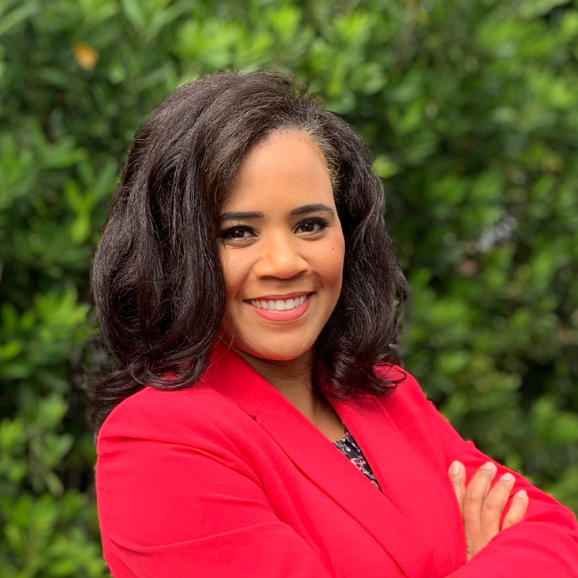
That premise sits at the center of the work of Nakeina E. Douglas-Glenn, Ph.D., associate professor at the L. Douglas Wilder School of Government and Public Affairs at Virginia Commonwealth University and director of the Research Institute for Social Equity. This spring, it has earned her national recognition from the American Society for Public Administration, which has named her a recipient of the Equal Opportunity/Affirmative Action Exemplary Practices Award.
The award honors those working to advance equity not as an aspiration, but as a practice embedded in how governments collect data, design programs and make decisions that shape daily life.
For Douglas-Glenn, the work begins with a question that is both technical and deeply human. What are we counting, and who is being counted?
Her research examines how public institutions measure inequity and how those measurements influence everything from housing access to resource allocation and program design. At a moment when governments are being asked to demonstrate both effectiveness and fairness, her work offers a framework for doing both.
Through her leadership of the Research Institute for Social Equity, Douglas-Glenn has helped move these ideas from theory into practice. The institute works with policymakers and practitioners to translate complex data into usable insight. These tools can guide decisions in real time rather than after the fact.
“Dr. Douglas-Glenn’s work reflects a clear understanding that data alone is not enough. It must be used intentionally to inform equitable policy decisions,” said Susan T. Gooden, Ph.D., dean of the Wilder School. “She has helped redefine how public institutions approach equity, not as an abstract goal, but as a measurable and achievable standard.”
That approach reflects a broader shift in public administration. Equity is increasingly treated as a core function of governance, one that must be built into the systems that define how policy works.
Douglas-Glenn’s recognition by ASPA places her among a national cohort of scholars and practitioners working to meet that challenge. She will receive the award this week at the Gloria Hobson Nordin Social Equity Awards and Luncheon during ASPA’s annual conference in Hollywood, California, where conversations about the future of governance continue to center on a fundamental question. Not just what government does, but how, and for whom, it does it.