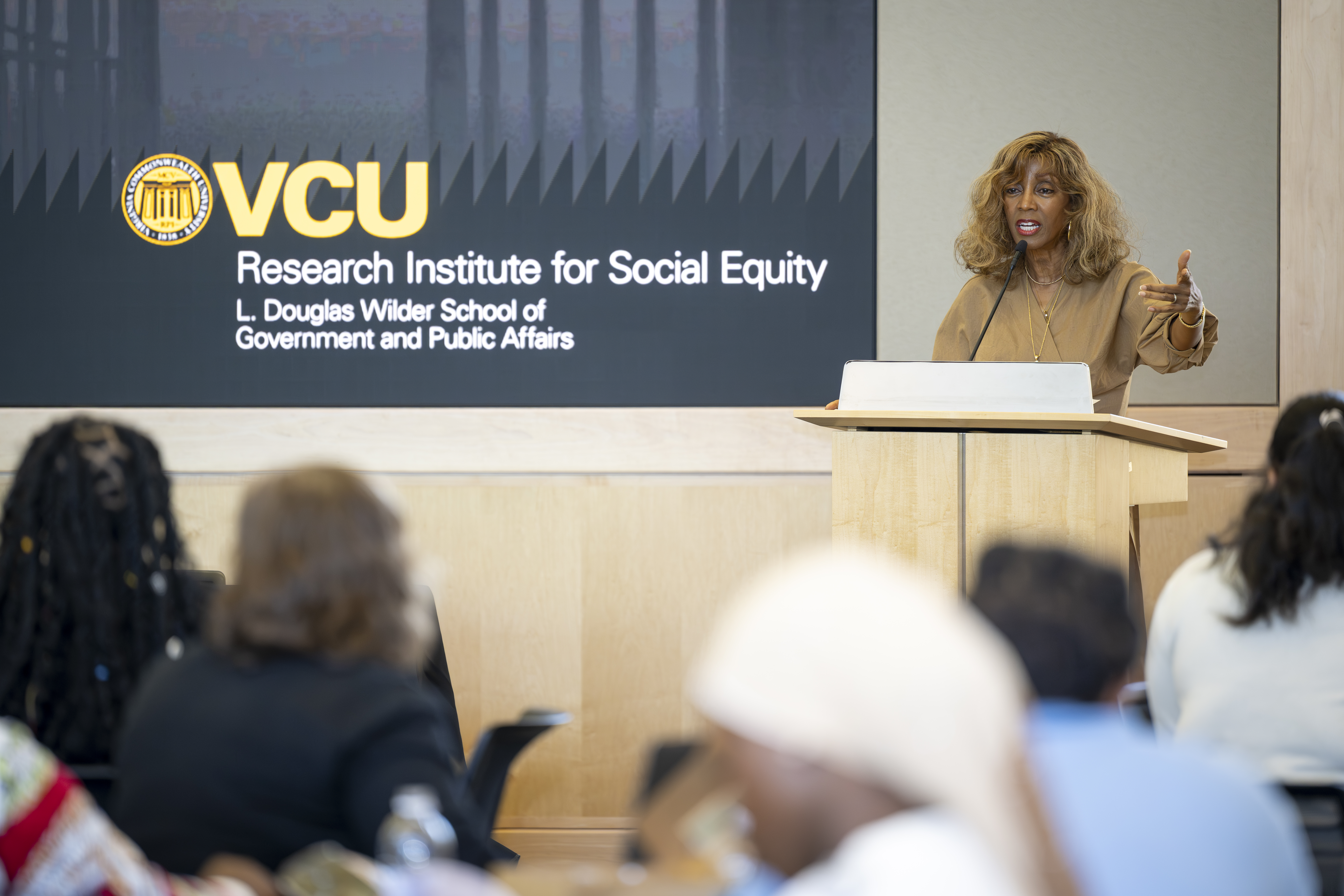
For three days, D. Pulane Lucas, Ph.D., says she heard her son’s voice.
It was a simple request: take the Himalayan salt lamp. Heavy, inconvenient, easy to leave behind. When she finally listened, she found what had been hidden: a briefcase tucked behind it, filled with his journals and a message that reframed everything that came next.
Her son, Stanley Wilson Jr., died in custody in 2023. His name never appeared in the official record.
That absence, a missing name, a missing record and a missing public accounting, was at the center of the April 21 launch of Uncounted Virginia at the L. Douglas Wilder School of Government and Public Affairs at Virginia Commonwealth University. Led by the Research Institute for Social Equity in partnership with Policy Pathways, and supported by the Richmond Memorial Health Foundation and the Wilder School’s criminal justice program, the initiative aims to surface deaths in custody that systems have failed to fully record, acknowledge or explain. In the U.S., deaths may be counted, but not consistently reported, publicly attributed or fully understood.
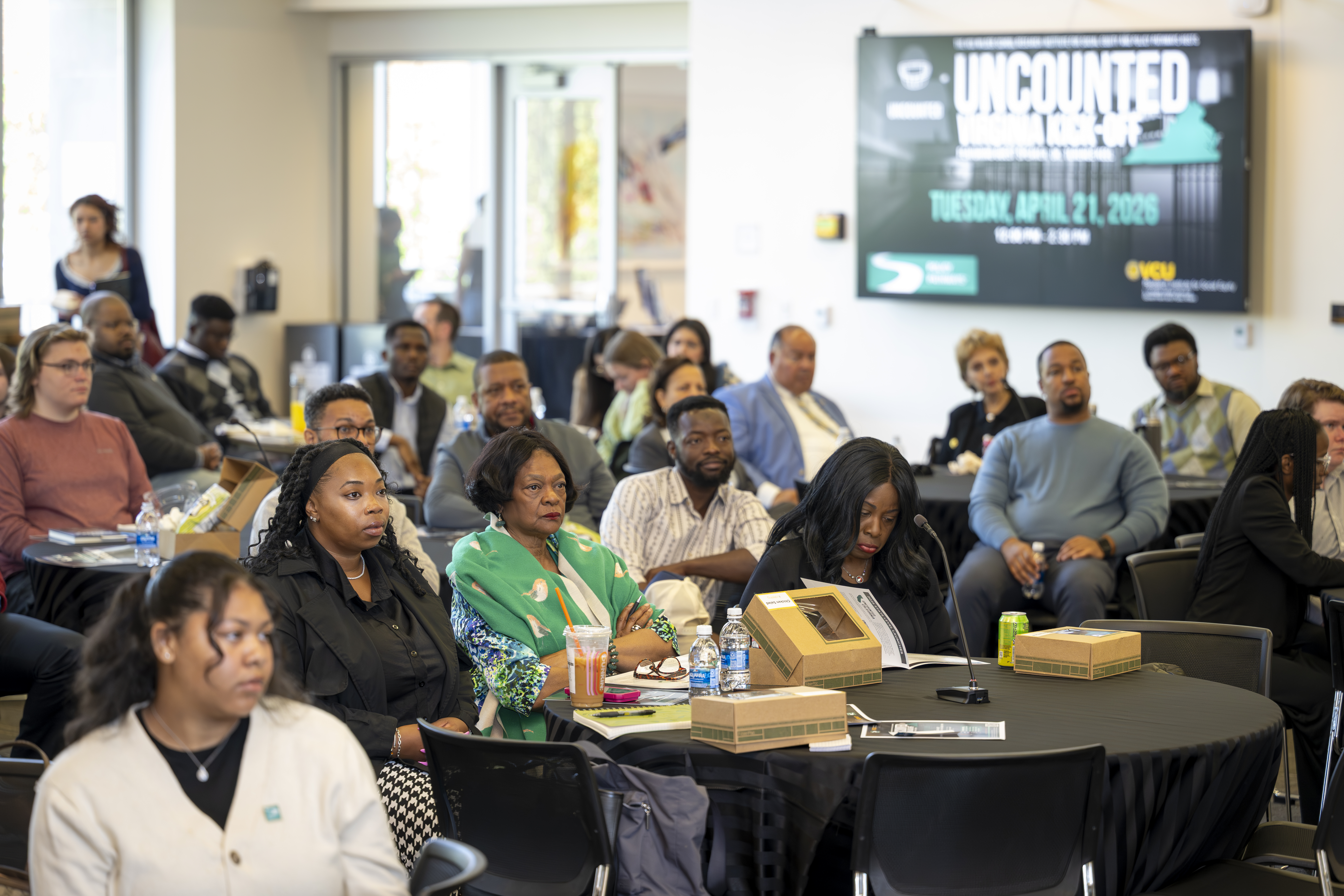
“We know that deaths in custody are real because we hear the names that are spoken,” said Nakeina E. Douglas-Glenn, Ph.D., director of the Research Institute for Social Equity. “But what about the names that go unrecorded, unreported, and ultimately unsaid?”
Virginia is among the first states to launch the effort, part of a broader national push to build a civilian-led database of in-custody deaths, one that draws on public reporting, community knowledge and independent research to fill gaps left by official systems.
For Lucas, president and CEO of Policy Pathways and a leading voice behind the Uncounted initiative, the work is both personal and collective.
For Susan T. Gooden, Ph.D., dean of the L. Douglas Wilder School of Government and Public Affairs, the work reflects a core institutional commitment.
“We are committed to advancing research that not only informs policy, but addresses systemic inequities, particularly where gaps in accountability have real consequences for individuals, families and communities,” she said.
“We can’t fix what we don’t know,” said Logan Sowers, who coordinates operations for Uncounted National, outlining the organization’s approach. Through an online reporting portal, individuals, including family members, medical professionals and correctional staff, can submit information about deaths that may not appear in official datasets.
The goal is not simply to collect data, he said, but to make those deaths visible and actionable.
Where the data falls short
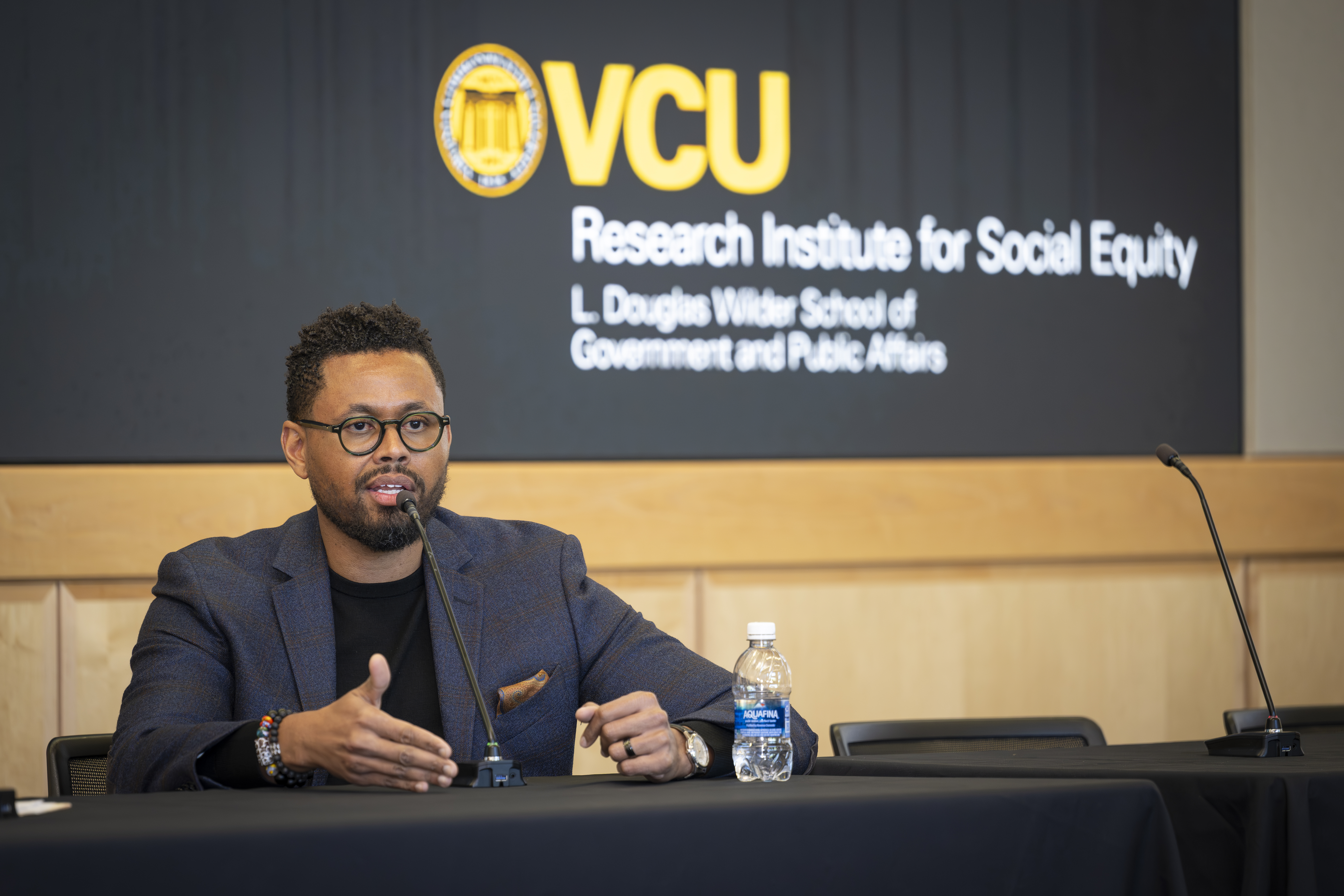
Presenting preliminary research from Los Angeles County, Amelia Rooney, who leads quantitative data and research analysis for Uncounted National, described a system in which deaths can be counted at the state level, yet never publicly acknowledged by the agency responsible.
“Counting a death is administrative,” she said. “Claiming responsibility is what makes accountability possible.”
Her analysis found that while hundreds of deaths were recorded across multiple systems, discrepancies in reporting laws and agency practices created what she described as “structural invisibility,” cases that exist in official records but lack clear public attribution.
The result is a fragmented system where responsibility can be diffused and oversight limited.
“If attribution is missing,” Rooney said, “it becomes unclear who must respond, what records to request and where scrutiny should be directed.”
That fragmentation is not confined to California.
Focusing on Virginia, Jule Trent, a research assistant working on the Uncounted Virginia project, presented early findings suggesting that the state’s own reporting systems face similar challenges. In 2024, she noted, 194 deaths were reported, but gaps remain, including delayed determinations and incomplete agency participation that leave critical questions unanswered.
Nearly one-third of prison deaths remain in a “pending” status, leaving families without clear answers for months. In local and regional facilities, high rates of use-of-force deaths and environmental concerns, including extreme heat and staffing shortages, raise additional questions about conditions inside correctional institutions.
“We cannot have accountability without timely, accurate data,” Trent said.
The conversation turned to a broader question with Terrence Keel, Ph.D., a UCLA professor and author of “The Coroner’s Silence,” whose work examines how death investigations can obscure state violence and public accountability.
Drawing on his research, Keel described a system shaped by distance, between the public and those who die in custody, and between official narratives and lived reality.
“At least five people will die either during arrest or in jail every day,” he said. “But we are only going to know the names of some of those people.”
Between 2000 and 2020, he added, more than 32,000 people died during arrest in the U.S., many of them never fully accounted for in public discourse.
“Dying in custody is the new capital punishment,” Keel said, describing a crisis that, in his view, “hides in plain sight.”
“When you have a death investigation system that is not accountable to the public,” he said, “people fall through the cracks.”
For Lucas, the work is both personal and collective.
In the days after her son’s death, she said, she learned that his case had not been included in official records tracking deaths in custody. That realization became the starting point for a broader effort, one that now extends beyond a single case, or even a single state.
“The story is not just about me,” she said. “It’s about all those who are uncounted.”
As the initiative expands to additional states, organizers say the goal is not only to document what has been missed, but to build a system in which fewer deaths go unrecorded and fewer families are left without answers.
The work ahead is clear: to count, to acknowledge and to act, and to ensure fewer lives go unrecorded.
Related stories

.jpg)