.jpg)
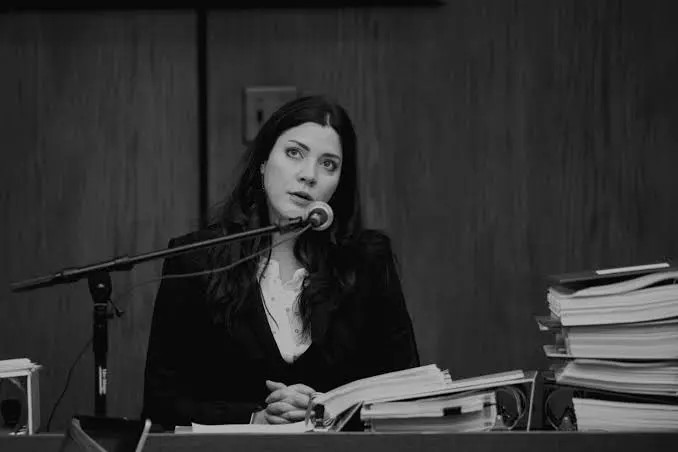
On Feb. 19, the Wilder School welcomed keynote speaker David Pate Jr., Ph.D., to campus as part of its Doctoral Lecture Series.
He came to talk about cages, both literally and figuratively.
In his lecture, “Partnered Research as Process: Co-Producing Knowledge on Reentry in Milwaukee – The Reentry Rising Project,” Pate explored the lived realities of men returning from incarceration and the policies that shape their chances of rebuilding their lives. An associate professor at the University of Wisconsin–Madison and the Dean’s Fathers and Fathering Faculty Fellow, Pate has spent more than two decades studying Black men — noncustodial fathers, men entangled in child support enforcement, men navigating corrections, men trying to return home to families who may not recognize them anymore.
“I’ve always only studied Black men,” he told the audience. “Not as variables. As human beings.”
That distinction matters.
In policy debates, Black men are often reduced to statistics: incarceration rates, recidivism percentages, employment outcomes. But the men in Pate’s research are something else entirely: fathers at birthday parties, sons caring for aging mothers, men standing frozen before a self-checkout kiosk because technology moved on while they were locked away.
For years, Pate has led a community-based research project in Milwaukee examining what reentry really looks like after incarceration. Backed by a $1 million partnership with local agencies, the work unfolded slowly, delayed by COVID, complicated by institutional review boards and shaped by political resistance. But the men kept talking.
.jpg)
They talked about housing that looks more like extended confinement than freedom. About halfway houses with petty rules and little dignity. About being released into neighborhoods already overpoliced and underresourced. One described sitting in a restaurant but refusing to turn his back to the room. Another admitted he orders only burgers because a full menu feels overwhelming after years of institutional routine.
“You get out,” one man told Pate, “and you think your mind is right. But it’s not.”
Wisconsin provides a stark backdrop for that conversation. Though Black residents make up a small percentage of the state’s population, Wisconsin has one of the highest Black male incarceration rates in the nation. In certain Milwaukee neighborhoods, incarceration is not the exception. It has become an expectation. Entire communities, particularly in zip code 53206, have been shaped by the churn of jail and prison. For Pate, those numbers are not abstract. They are the terrain in which his research lives.
What distinguishes his work is not only what he studies, but how he studies it. Pate does not approach reentry from a safe academic distance. He walks neighborhoods. He attends weekly reentry meetings. He sponsors community dinners. He tours holding facilities so that when men describe the absence of sunlight or the psychological strain of waiting in a windowless jail, he understands what they mean. Earlier in his career, while conducting walking interviews in heavily surveilled neighborhoods, he developed a protocol with his advisor: if police detained the person he was interviewing, he would go too, recognizing that trust in these settings depends on researchers demonstrating that they stand with the communities they are studying.
Trust, he learned, is not granted because you carry a university ID. It is earned over time, by showing up.
That ethic of immersion shaped the Reentry Rising Project, which was designed not simply to study returning citizens, but to co-produce knowledge with them. Lived experience was not anecdote. It was expertise. Partnered research, Pate emphasized, is not extraction. It is a mutual endeavor.
The stories that emerged revealed how conditional freedom can be. In Wisconsin, child support debt continues to accrue during incarceration under a doctrine that treats imprisonment as “voluntary unemployment.” Court fees, supervision costs and administrative deductions chip away at what little money families send inside. By the time some men come home, they are already in financial quicksand. Housing, Pate found, is the most destabilizing barrier. Without a safe place to sleep, how does anyone stabilize mental health, find a job or rebuild fractured relationships?
Meanwhile, probation officers, often holding wide discretion, can determine whether a misstep becomes a setback or a return to confinement. A flat tire. An unintentional police encounter. A missed appointment. Freedom remains conditional.
What unsettled Pate most was not simply the fragility of reentry programs. It was the larger moral question beneath them.
“What do we owe people who have completed their sentence?” he asked.
It is a question America prefers to avoid.
Charity is easier. A donated suit. A church-sponsored dinner. A mentoring program. Milwaukee, like many cities, is rich in goodwill. But goodwill does not dismantle structural barriers. It does not rewrite housing policy. It does not erase accumulated debt. It does not neutralize stigma. Charity helps people survive; equity changes the rules that made survival so precarious in the first place.
Pate shared the story of a formerly incarcerated man who rose to lead Milwaukee’s Office of Violence Prevention, an appointment hailed as a breakthrough for lived experience in public leadership. Months later, legal changes barred individuals with certain felony records from holding such positions. He was removed. Reentry, then reversal.
In the current political climate, Pate’s work has drawn scrutiny. Grants have been rescinded. Legislators have requested his academic dossier. Students record lectures in classrooms where race is a flashpoint. He acknowledged the discomfort and his decision to continue.
“Someone has to do this work,” he said.
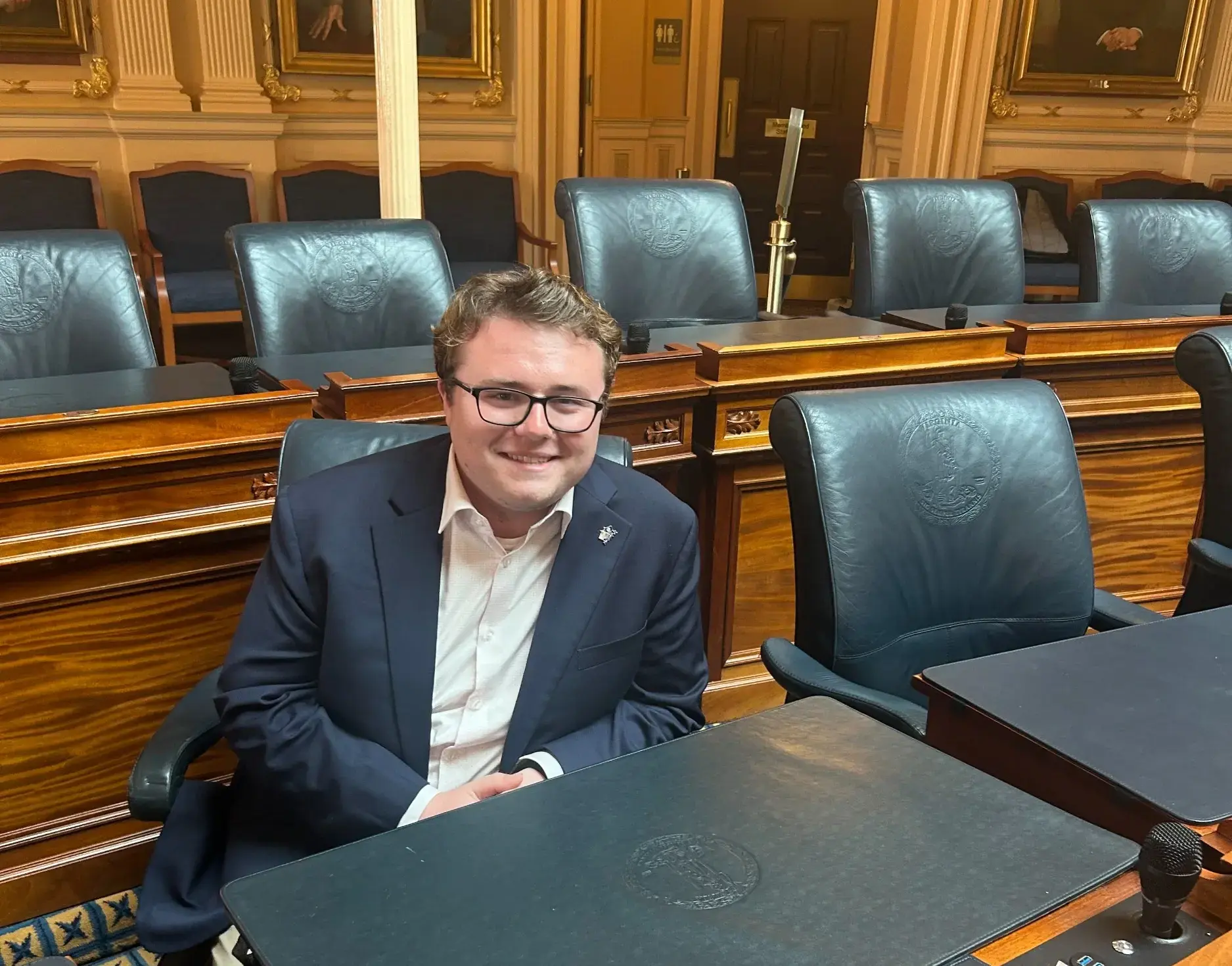
During his visit to the Wilder School, Pate also spent meaningful time in conversation with doctoral students, discussing methodology, positionality and the risks and responsibilities of engaged scholarship. His career models what it means to align research with lived reality, and to accept that proximity to one’s community brings both insight and accountability.
For the Wilder School audience, the message was less about Milwaukee than about systems everywhere. Incarceration does not end at the prison gate. It lingers in policy, in debt, in surveillance and in shortened life expectancy. It lives in the body.
Pate invoked a stark framework: formerly incarcerated people as “living dead citizens,” formally free but socially constrained. Not enslaved, but not fully restored. If freedom is conditional, if opportunity depends on race and zip code, if policy quietly reimposes punishment long after a sentence is served, then reentry is not redemption. It is endurance. And endurance, he suggested, is not justice. The question Pate left us with is not whether formerly incarcerated men can succeed, but whether society is prepared to let them.