As emerging technologies continue to reshape national security, military leaders face a challenge that extends well beyond invention itself. New capabilities may demonstrate extraordinary promise, but history suggests that lasting advantage depends on something else: whether organizations can transform technological breakthroughs into sustained operational capability and successfully adapt those capabilities across different organizations, missions and contexts
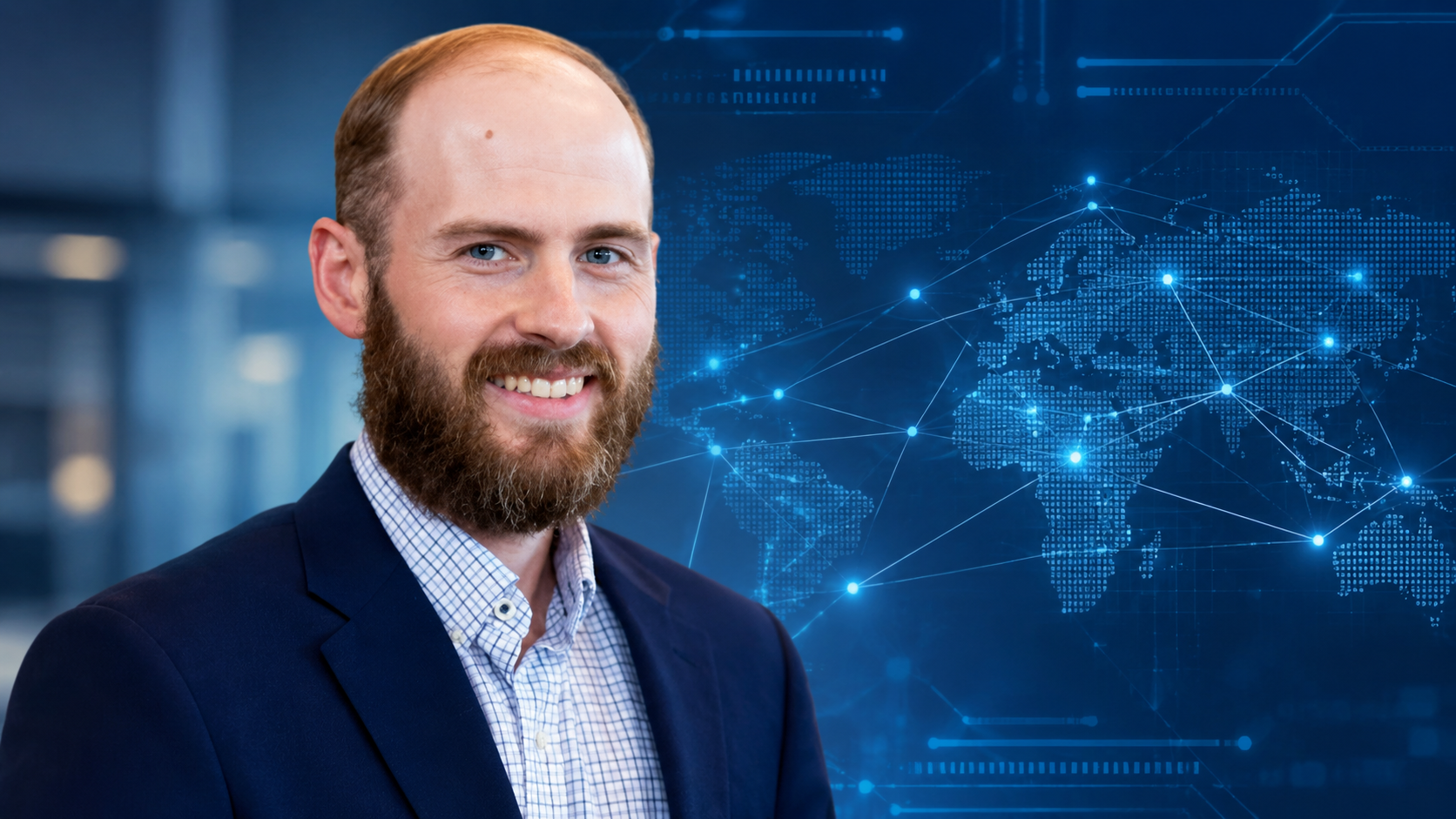
Christopher Whyte, Ph.D., associate professor in Virginia Commonwealth University's L. Douglas Wilder School of Government and Public Affairs, will explore that challenge as a newly selected nonresident research fellow with the U.S. Air Force Academy's Institute for Future Conflict during the 2026–27 academic year.
The competitive fellowship brings together scholars, military leaders and policy experts to examine the technologies, geopolitical trends and strategic questions likely to shape future conflict. Throughout the academic year, fellows will collaborate on research projects, workshops and discussions with Air Force Academy faculty and cadets.
"What appealed to me most was the Institute's focus on the relationship between emerging technology and how military organizations actually adapt," Whyte said. "There is often a large gap between demonstrating that a technology has extraordinary potential and figuring out how to organize, train and operate differently because of it. The fellowship gives me an opportunity to study that problem alongside scholars, practitioners and cadets who are thinking very concretely about what future conflict may require."
Whyte's fellowship project will examine how military organizations have historically incorporated transformational technologies into enduring operational capability. His research will focus on historical examples, including advances in radar and early jet propulsion, to better understand the conditions that enable organizations to move beyond experimentation and successfully integrate new technologies into doctrine, training, workflows and decision-making.
Those historical lessons could also help illuminate contemporary security challenges. As cyber, autonomous tools and other advanced technologies reshape the security landscape, Whyte's research explores how organizations transform technological breakthroughs into lasting military capability and why those capabilities spread successfully in some settings but not others.
"I'm interested in moments when a broadly understood technology develops a new capability that fundamentally changes what becomes operationally possible," Whyte said. "Having access to the technology is only part of the story. The larger question is whether organizations can absorb it into doctrine, training, workflows, supporting technologies and decision-making. I hope the research gives us a better way to identify when technological promise is likely to become lasting military capability."
Whyte's research examines cybersecurity, emerging technology and international security, with a particular focus on how governments and military organizations develop, adapt and transfer new capabilities in response to technological change. His appointment reflects the Wilder School's expanding contributions to national conversations on cybersecurity, emerging technology and public policy.
"One of the biggest misconceptions is that once a sufficiently capable model exists, its effects follow naturally from the technology," Whyte said. "National security history gives us plenty of reasons to doubt that. Technologies become consequential through the systems built around them, including the people, organizations, doctrine, data and supporting capabilities that determine how they are actually used. Some of the most important questions are who can turn increasingly capable models into reliable practice, how quickly they can do it and what has to change around the technology for that to happen."
The fellowship begins this academic year and includes collaborative research, workshops and engagement with Air Force Academy faculty, cadets and fellow researchers examining the future of conflict and national security.